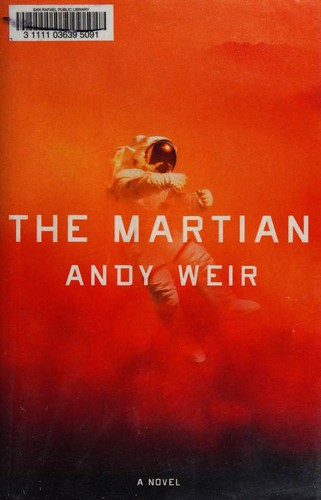

A brilliantly engineered survival tale that runs on competence, wit, and momentum — though it is also a rather thin novel once you look past the machinery.
I came to The Martian expecting a clever survival romp, and that is exactly what Andy Weir delivers: a brisk, technical, often very funny account of one man trying not to die alone on Mars. The book’s great strength is its clarity of purpose. Weir understands that a survival story lives or dies on problem-solving, and he gives Mark Watney one engineering crisis after another with admirable discipline. The result is gripping, and often genuinely enjoyable in that old-fashioned adventure sense: every page is doing work.
What I admire most is the book’s procedural intelligence. Weir has a knack for turning orbital mechanics, chemistry, botany, and bad luck into narrative fuel. He also gives Watney a sharp, self-deprecating voice that keeps the material from sinking under its own technical weight. The humour is effective because it arises from irritation, isolation, and stubbornness rather than from quips pasted on top. For a self-published origin, the book is impressively taut and commercially savvy; it knows exactly what it is and refuses to wander.
But for all that competence, I do think The Martian is limited. It is emotionally narrow, and in places deliberately so, but that narrowness becomes a weakness when the story asks for more than logistics. Watney can start to feel less like a fully various human being than a well-rendered instrument of problem-solving. The supporting cast is mostly functional, and the Earthside material is there to keep the plot moving rather than to deepen it. Weir also leans hard on a certain technical triumphalism — the novel’s faith in ingenuity is appealing, but it occasionally shades into smugness, as though sufficient expertise can flatten all tragedy.
I do not mean this as a dismissal. The Martian is a very good example of its type: lean, lively, intelligent, and far better constructed than the average bestseller. Yet I would not call it profound, and I would not pretend it has the emotional reach of the classics it sometimes invites comparison with. It is a superb engine of narrative suspense, not a great novel in the larger sense. That distinction matters, and Weir’s book is strongest when it accepts its own modest ambition.
Who should read this
Read this if you want a sharply built survival story, enjoy hard science wrapped in brisk humour, or like your fiction to move with the efficiency of a well-run machine. If you need deep character complexity or emotional breadth, you may find it a little airless.
A personal note from Thornton
I enjoyed it a great deal, but I enjoyed it in the way one admires a clever machine: with respect, not surrender. It’s a fine piece of popular storytelling, and I can see why people love it — I just don’t think love should be mistaken for depth.

Conversation(0)
Join in — no account needed. A name and email are all it takes. Your email is never shown publicly.