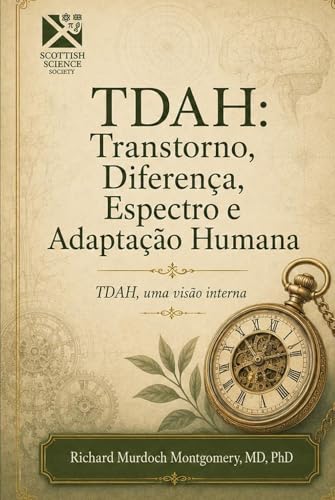

A lucid, humane, and impressively well-prepared account of ADHD that treats it as a biological reality without reducing it to a slogan. I found its blend of clinical seriousness and lived-experience sensitivity especially persuasive.
What struck me first was the book’s refusal to settle for the usual false choices around ADHD: disorder or identity, deficit or difference, pathology or adaptation. Montgomery instead argues from within the science that ADHD is best understood as a spectrum-shaped neurodevelopmental condition whose expression depends on context, development, and environment. That framing is not merely fashionable; it is carefully built, and the book earns it by moving steadily between neurobiology, clinical observation, and the practical realities of daily function.
I was particularly impressed by the author’s explanatory discipline. The chapters do not leap to grand conclusions before the evidence has been laid out; rather, they assemble the case patiently, with attention to how attention, impulsivity, executive control, and compensatory adaptation interact. The result is a book that is scientifically literate without becoming mechanistic. It explains why ADHD can look like impairment in one setting and resourcefulness in another, and it does so without romanticising difficulty or flattening difference into mere pathology.
There is also a welcome seriousness about diagnosis and interpretation. I appreciated the book’s caution around overgeneralisation, especially in a field where public conversation often swings between alarm and reassurance far too quickly. Montgomery is at his best when he distinguishes clinical categories from popular clichés, and when he reminds the reader that good science must account for variation rather than erase it. The writing is clear, the structure careful, and the argument consistently double-checked in tone as well as content.
If I have one small affectionate caveat, it is that the density of the conceptual framing may ask a little patience from readers who want a purely practical handbook. But that is also part of its strength: this is not a quick-fix book, nor does it pretend to be. It is a thoughtful and credible contribution to the literature on ADHD, notable for its balance, its rigour, and its humane refusal to oversimplify.
Who should read this
I would recommend this to clinicians, psychology and medicine students, educators, and thoughtful general readers who want a serious scientific account of ADHD rather than a pop-psychology summary. It will be especially valuable for readers interested in the boundary between diagnosis, neurodiversity, and adaptation.
A personal note from Menon
I came away admiring its intellectual honesty. It is the sort of book that enlarges understanding without straining for applause, and that is rarer than it should be.


Conversation(0)
Join in — no account needed. A name and email are all it takes. Your email is never shown publicly.