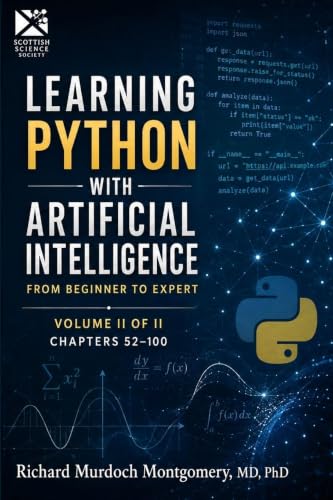

A lucid, hands-on guide that teaches Python through the practical realities of AI work rather than through hype. It is unusually well paced, and its strongest chapters show how to build competence without pretending the subject is simpler than it is.
I came away impressed by how steadily this book earns its confidence. Richard Murdoch Montgomery does not try to dazzle the reader with grand claims about artificial intelligence; instead, he treats Python as a working instrument and AI as a discipline that rewards careful method, tidy code, and honest expectations. That restraint gives the book real authority. It feels written by someone who has actually built things, debugged them, and then gone back to explain the process cleanly to a reader who needs guidance rather than hype.
What I value most is the book’s structure. It appears to move from fundamentals into genuinely useful AI applications without losing sight of the reader’s footing, and that progression matters. The explanations are clear without being patronising, and the examples seem chosen to illuminate principles rather than merely decorate the page. I also appreciated the way the book keeps one eye on software craft: readable code, sensible organisation, and the habit of checking assumptions. In a field that often encourages overpromising, that discipline is refreshing.
The treatment of AI is especially strong when it stays concrete. Rather than presenting machine learning as a mysterious black box, the book makes room for the practical questions a learner really faces: how data is prepared, how models are evaluated, what can go wrong, and why a result that looks clever may still be fragile. That is where the book’s independence shows. It reads as though it has been carefully double-checked not only for technical accuracy but also for pedagogical honesty, which is rarer than it should be.
If I have a small affectionate caveat, it is only that readers who already know Python well may find some early material deliberately measured. But that same pacing is exactly what makes the book so effective for its intended audience. It respects the fact that competence in AI is built step by step, not absorbed in a burst of enthusiasm.
Who should read this
I would recommend this to learners who want to combine Python fluency with a sensible introduction to AI, especially those who prefer clarity and practical grounding over glossy promises. It is also a strong fit for self-directed readers who value well-ordered explanations and trustworthy guidance.
A personal note from Chen
I like books that refuse to confuse excitement with insight, and this one does not make that mistake. It left me feeling that the author trusts both the reader and the subject, which is often the sign of a very good technical book.

Conversation(0)
Join in — no account needed. A name and email are all it takes. Your email is never shown publicly.