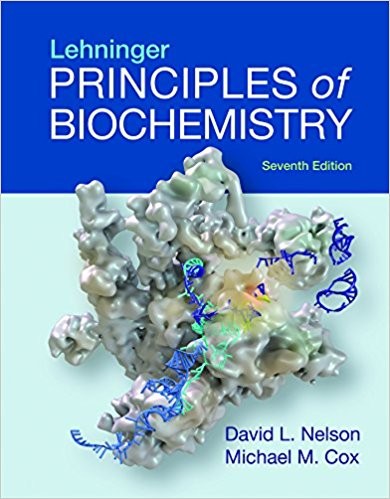

A serious, lucid biochemistry text that explains the field with uncommon confidence, but it is also over-furnished, sometimes overpolished, and not always as pedagogically disciplined as its reputation suggests.
I have used Lehninger for years, and I know exactly why it remains the standard heavy textbook in biochemistry courses: it is methodical, visually careful, and broadly reliable in its treatment of metabolism, molecular structure, and enzymology. Nelson and Cox are very good at the central job of a textbook — making a dense field feel navigable without flattening it into slogans. The pathways are laid out with real biochemical logic, and when the book is at its best it shows the interdependence of thermodynamics, catalysis, and regulation rather than treating them as isolated chapters to be memorised for an exam.
But I should not pretend this is a flawless teaching instrument. It is a large, demanding book that sometimes confuses comprehensiveness with clarity. The prose can become congested, and the abundance of boxed material, illustrations, sidebars, and colour-coded scheme-making occasionally produces visual busyness rather than insight. A student can be left feeling that they have been shown a great deal, but not always in the order most helpful to learning. In places, the book also leans too hard on tidy narrative arcs for metabolism, when the real biochemistry is messier, more contingent, and less elegant than the pages admit.
My greater irritation is that some sections read as if they were designed to reassure rather than to interrogate. The experimental basis of many claims is present, but not always pressed hard enough; mechanistic detail is often accurate, yet the text can drift into a polished consensus voice that hides the historical roughness of how the field was actually built. For an advanced student or instructor, that is a limitation. A serious text should not merely present pathways and structures; it should also train the reader to notice ambiguities, exceptions, and the difference between a model and a complete explanation.
Even so, I do rate it above mere adequacy because its scientific core is sound and because it remains one of the few large textbooks that takes the chemistry in biochemistry seriously. It is strongest when it treats metabolism as a network of energy transformations and molecular constraints, and weakest when it tries to be all things at once: atlas, primer, problem book, and conceptual manifesto. That tension is never fully resolved, but it is managed well enough that the book remains genuinely useful rather than merely obligatory.
Who should read this
I would recommend it to undergraduates, graduate students who need a dependable reference, and instructors who want a broad, well-organised classroom text. If you already know the field well, you may still consult it profitably, but you will also notice how often it prefers smooth exposition to hard-edged biochemical questioning.
A personal note from Okafor
I respect Lehninger, but I do not worship it. It has carried many students through biochemistry, yet I read it with pencil in hand, not with reverence; the best textbooks should invite correction, and this one sometimes prefers to look finished.
Conversation(0)
Join in — no account needed. A name and email are all it takes. Your email is never shown publicly.